
It Started With a Photograph.
World Trade Center Commemorative Model. No CAD files. No dimensioned drawings. Just a reference image and the challenge of transforming it into a detailed, modular product engineered for repeatable manufacturing, straightforward assembly, and protected shipment.
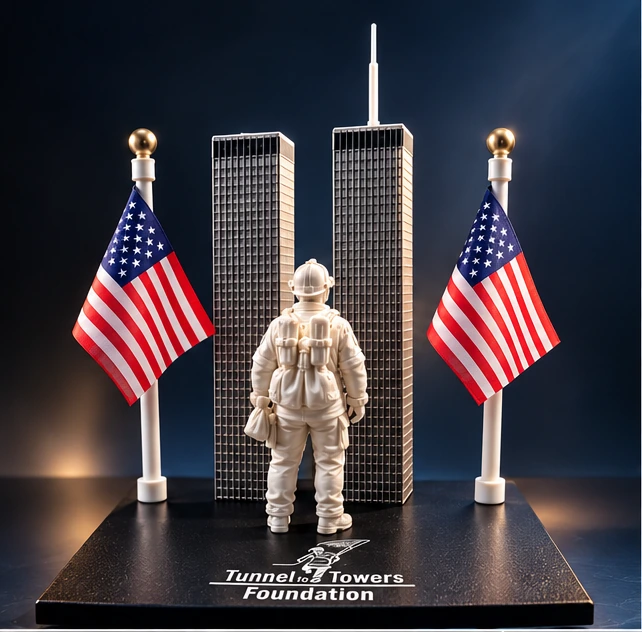
Reimagine an exhibit as a complete product.
The original reference was a photograph of a much larger display. EX3D had to establish the proportions, develop the architecture and supporting components, and design an assembly that could be produced and shipped as a kit.
The proposed production program did not proceed. The engineering, prototype development, and evaluation units were completed.
Rebuilding the towers from first principles.
As the intended display grew from an early five-inch-tower concept to towers more than ten inches tall, simple scaling was no longer enough. EX3D modeled a representative tower wall parametrically and patterned the architecture around the square structure.
The towers were designed largely hollow to reduce print time and material use. The upper region was reinforced to support a separate antenna that plugs into a hexagonal interface—allowing secure, repeatable assembly without permanently attaching a fragile detail.
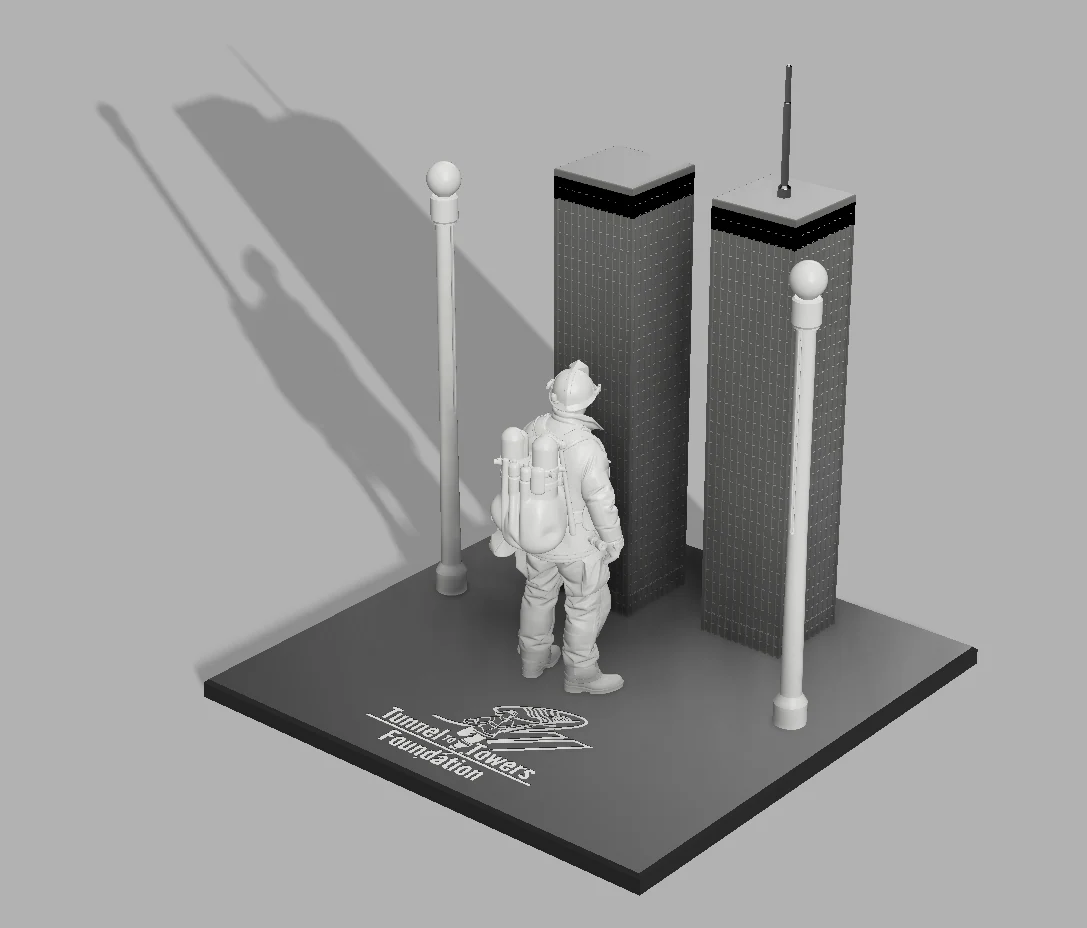
The flagpoles were a project of their own.
Tall, narrow FDM prints became increasingly susceptible to vibration and movement as they grew. After roughly eight iterations, EX3D developed temporary gusseted stabilizers to support the flagpoles during printing and produce consistent results.
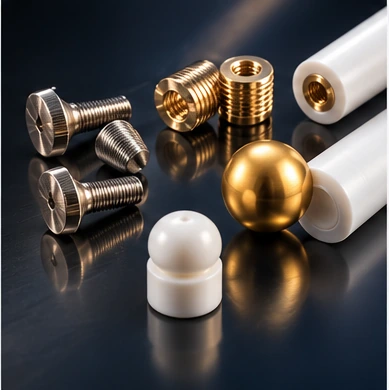
Commercially available miniature flags introduced another challenge: their wooden staffs could not simply be attached or inserted as supplied. A cutting jig standardized their length; a custom slot accommodated the fabric; and a threaded finial secured each flag in the printed pole.
The result: a clean finished appearance without relying on repetitive hand-gluing across a proposed 100-kit run.
Every component had a purpose.
Instead of printing everything as one inseparable object, EX3D developed a serviceable kit with mechanical connections, removable details, and replaceable parts.
Heat-set inserts and metric stainless-steel screws anchored the towers, flagpoles, and firefighter to the base. Two mounting points at the firefighter's feet established alignment.
A purchased hex key received a custom modeled handle, creating an intentional assembly tool that belonged with the kit.
Antennas, finials, flags, and hardware were designed with the possibility of replacement in mind—not treated as disposable details.
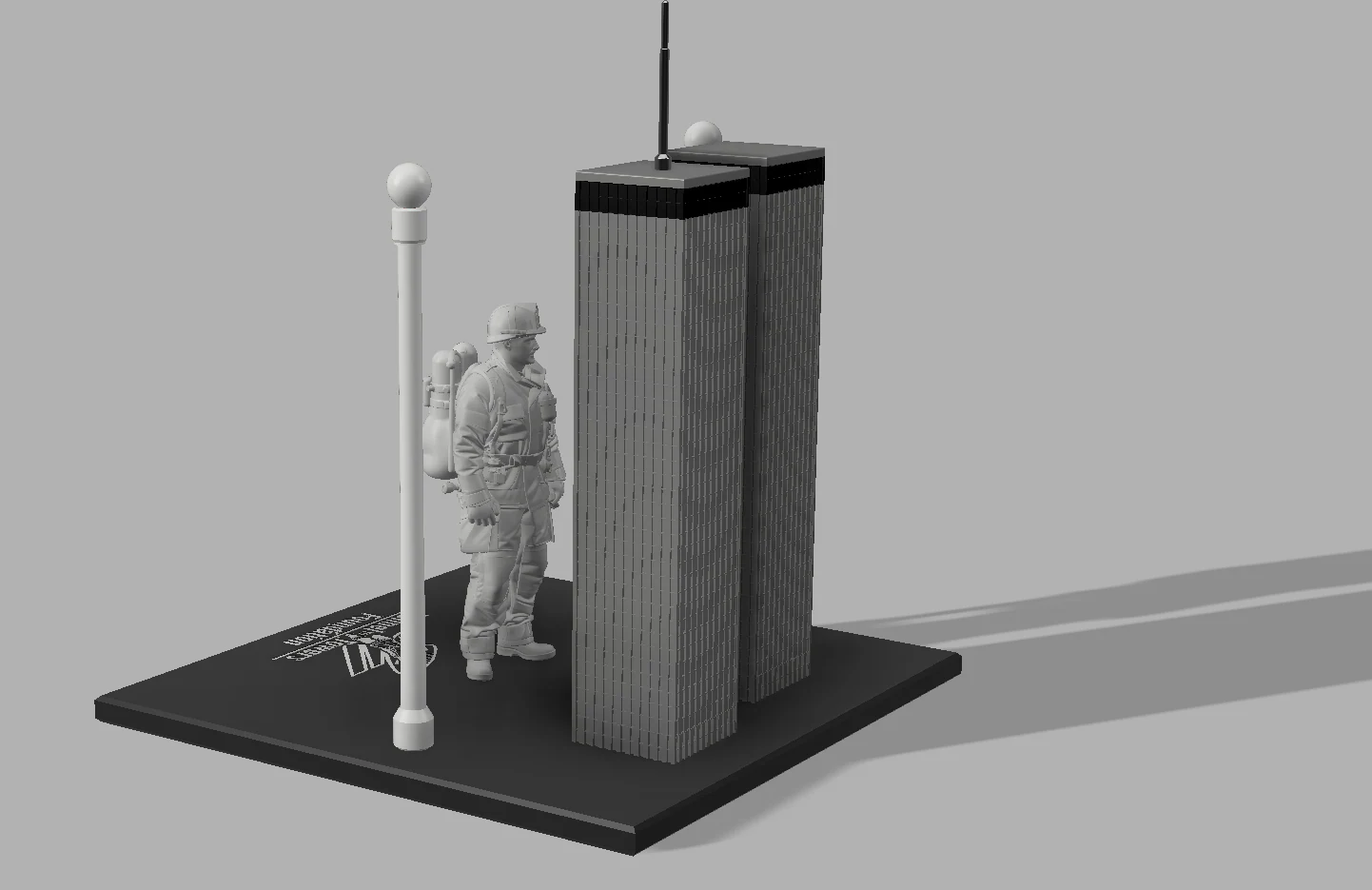
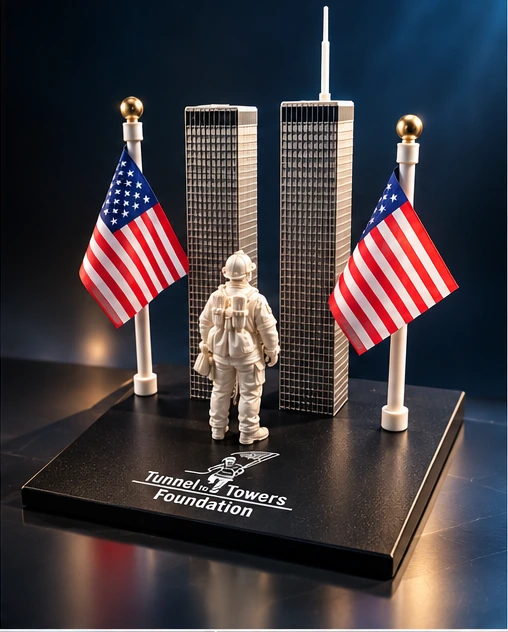
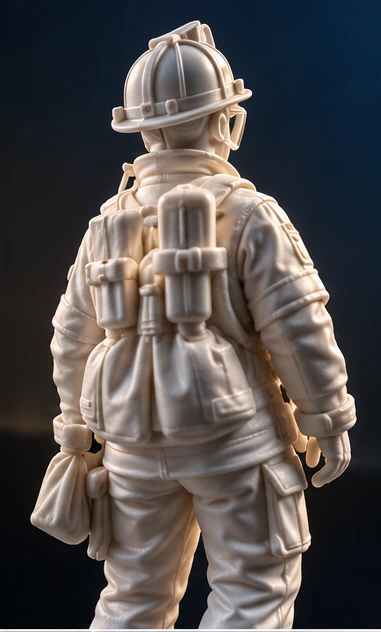
The firefighter figure was based on an externally sourced mesh; the surrounding product architecture and assembly engineering were developed by EX3D.
The product wasn't finished until it could travel.
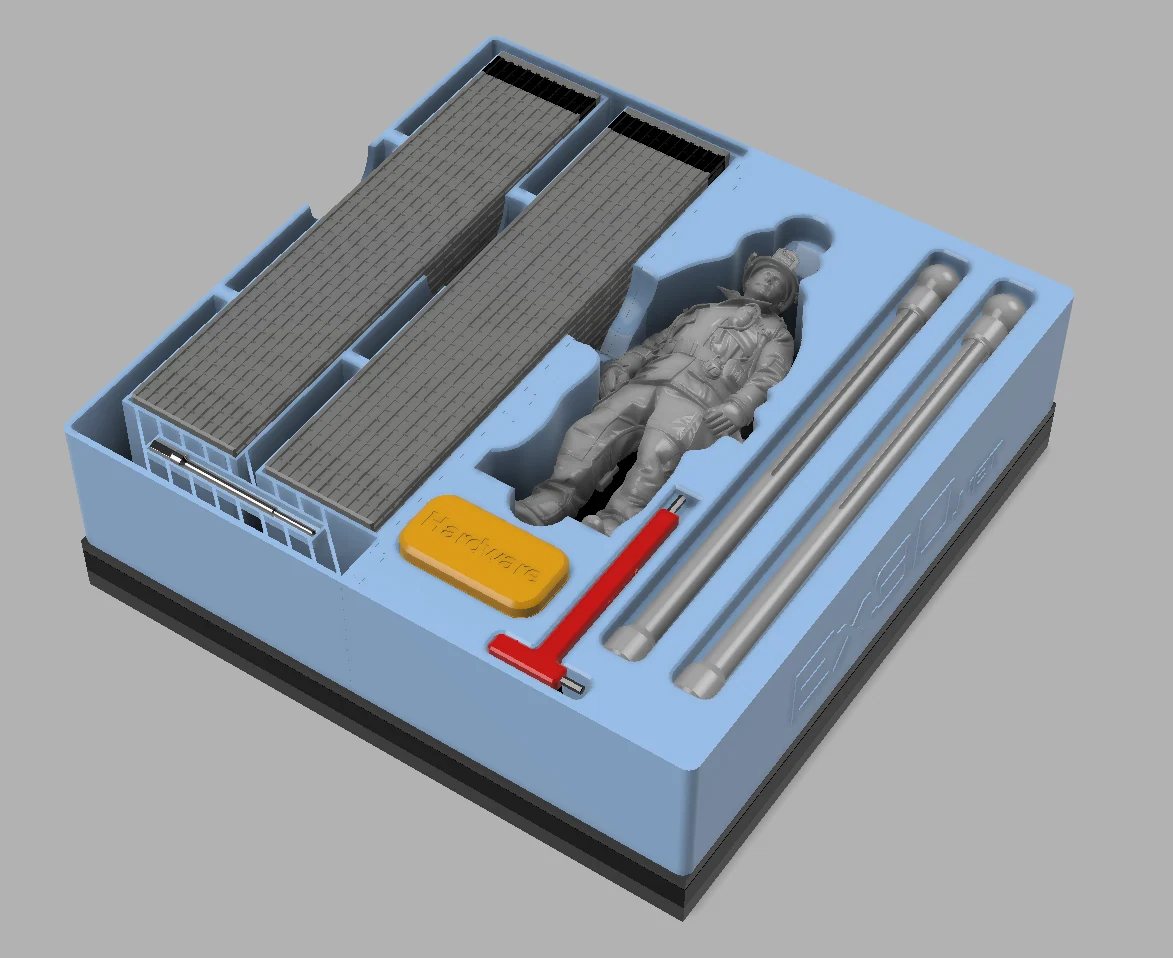
The team evaluated protective foam options, then developed a custom 3D-printed organizer to hold the model's separate parts in repeatable positions. The organizer was intended to sit on protective foam inside a custom box, with additional foam above.
The packaging concept organized the towers, firefighter, flagpoles, installation tool, and small hardware. It was designed to simplify packing, reduce handling errors, protect delicate details, and make unpacking and assembly intuitive.
Even the hardware kit included a spare flagpole finial—a small decision with real value for the person receiving the product.
Four prototypes. A complete engineering effort.
Four physical prototypes were delivered for evaluation. The planned 100-unit production order was ultimately not approved, but the design work, manufacturing trials, assembly engineering, and packaging development had already demonstrated a complete product-development approach.
For EX3D's founder, who later served as a firefighter and personally experienced the events of September 11, this project carried significance beyond its technical challenges. It was an opportunity to approach a commemorative subject with care and respect.
This independent project showcase is not presented as an endorsement or affiliation with any commemorative foundation or organization.